Is it leaking right now?
If water is coming through as you read this, go to our emergency leak guide first: power off near the water, buckets down, photos for the insurer. This page is about what comes next, getting the leak found and fixed for good.
Where do roof leaks usually start?
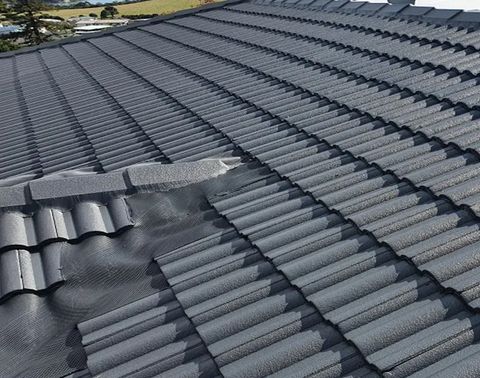
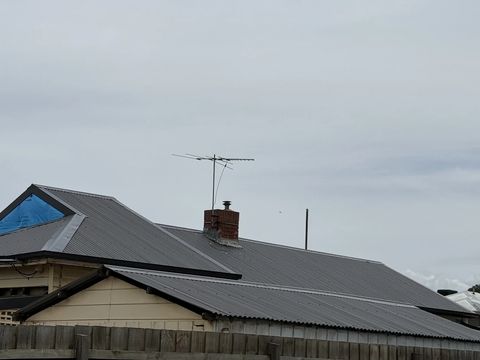
| Tiled roof | Metal roof | |
|---|---|---|
| Most common culprit | Cracked or slipped tiles | Loose screws with perished washers |
| Along the top | Cracked pointing or loose ridge caps | Ridge cap screws and seals |
| Where slopes meet | Rusted or clogged valley irons | Rusted or clogged valley sheets |
| Around fixtures | Chimney, skylight and vent flashing | Flashing at skylights, vents and solar mounts |
| At the edges | Overflowing gutters backing up under the tiles | Overflowing gutters and dried-out sealant at the laps |
Monier, a major tile maker, lists cracked or displaced tiles, cracked ridge bedding and blocked gutters, downpipes and valleys among the common causes of leaks.
Water can travel a long way along battens and rafters before it falls, so the stain on your ceiling may be well away from the actual gap. Our leak finder quiz asks the questions a roofer would and points you to the likely spot.
Not every damp patch is the roof, either. A dripping pipe, a shower upstairs, an air conditioner's drain line or plain condensation can all look like a leak. Our page on ceiling leaks helps you tell them apart.
How does a roofer find and fix a leak?
Questions first
When does it leak: every time it rains, only in a downpour, or only with wind from one direction? The answer narrows things down before anyone goes up a ladder.
Into the roof space
Stained timber, soggy insulation or daylight through the tiles often lead straight to the spot.
Onto the roof
Tiles, sheets, ridge, flashing, valleys and gutters above the wet area, working uphill from the stain.
Testing, if it's still hiding
Running a hose over one section at a time while someone watches inside is slow but reliable. Some roofers add moisture meters or thermal cameras. More on that in roof leak detection.
Fixing the cause
Swap the tile, refix or replace the flashing, rebed the ridge, change the screws, clear or replace the valley. Then, ideally, test it again.
What should you ask the roofer?
- Where do you think the water's getting in, and why?
- Is your price for finding the leak, fixing it, or both?
- If the first fix doesn't stop it, will you come back at no extra charge?
- Can I see photos of the cause and of the finished repair?
- Is this storm damage or wear, and will you put that in writing for my insurer?
What you can do, and what's the roofer's job
You can
- Write down when it leaks and what the weather was doing at the time
- Pencil around the edge of the stain and date it, so you can see if it spreads
- Watch the gutters and downpipes from the ground in heavy rain for overflow
- Shine a torch into the roof space from the manhole without crawling across the ceiling
Leave to a roofer
- Tracing the leak on the roof itself
- Hose testing, which needs someone up top
- Repairs to tiles, sheets, flashing or valleys
- Any roof that might be asbestos cement
What we'd do about a leak
Book a roofer while the leak is fresh and you can still show them the stain and say when it drips. Ask for the cause in plain words with a photo of it, not just a price. And ask whether a return visit is included if the first fix doesn't work, because stubborn leaks don't always give up at the first attempt.
Want a roofer to take a look?
Tell us the job and your postcode. We match it with a Find My Roofer certified roofer who specialises in that kind of work, and they call you to quote. Your number goes to them alone.