Heat resistant or heat reflective?
Lots of people search for heat resistant paint. That's paint made to survive high temperatures, like on a barbecue or a flue. For a roof, what you want is heat reflective: a coating that stops the roof soaking up as much heat in the first place.
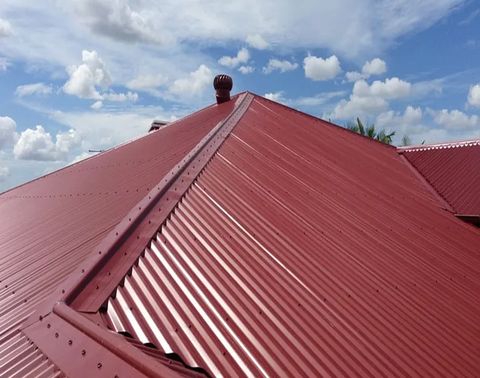
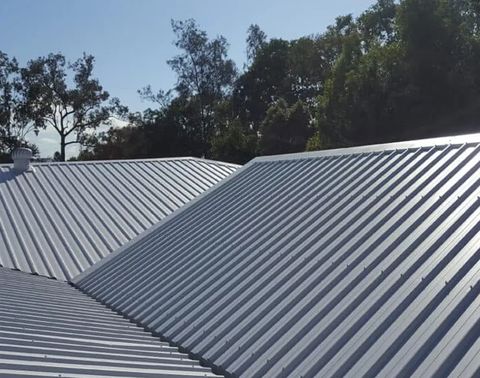
Colour does a lot of the work, because light colours reflect more sunlight than dark ones. Reflective coatings go further, with pigments that bounce back more of the invisible infrared part of sunlight, so some mid-tone colours can stay cooler than a standard paint of the same shade.
The number to ask for
Compare products by solar absorptance, a ratio from 0 to 1. BlueScope explains that a roof rated 0.7 absorbs 70% of the sun's energy and reflects 30%, so lower is cooler. It says light roofs can be up to 35 degrees C cooler on the surface than dark roofs in hot, sunny weather.
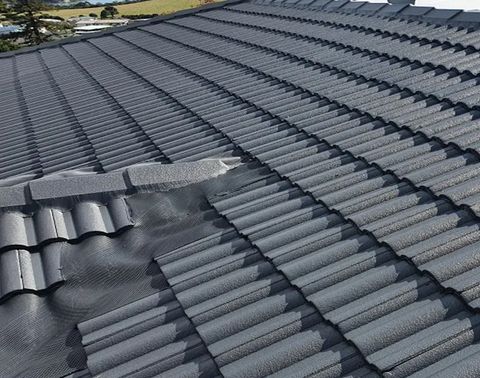
For a sense of the range, BlueScope publishes 0.33 for COLORBOND Surfmist, 0.73 for Monument and 0.95 for Night Sky. Tile makers publish the same kind of figure: Bristile's concrete tile colours run from 0.28 to 0.95. Ask your roofer for the figure on the coating you're being quoted.
Who notices the difference
Metal roofs heat up fast in the sun and pass that heat straight into the roof space, so they tend to gain the most. CSR Bradford says an unventilated roof space can reach 70 degrees C in summer.
You'll notice it more in a house with thin ceiling insulation, rooms right under the roof such as an attic or a raked ceiling, or a patio with nothing between you and the sheet. In a well-insulated house, the change indoors may be small. The Australian Government's Your Home guide says roof and ceiling insulation can save 45 percent or more on heating and cooling costs, which is why we'd check it first.
On glare, BlueScope warns that a darker colour won't necessarily reduce it and can hurt energy efficiency. Orientation, pitch, shielding and finish matter too.
What to ask before choosing a coating
- The product's technical data sheet, with its solar absorptance or reflectance figure
- Whether the reflective version comes in the colour you want
- Confirmation it's made for your roof type, metal or tile
- The primer it needs, and how many coats the maker specifies
- The manufacturer's warranty, and what it requires of the applicator
- Where any temperature or energy-saving claim comes from
Where you fit in
You can
- Check your ceiling insulation first, if the manhole is safe to reach
- Compare data sheets, not brochures
- Keep branches trimmed back, because dirt and leaf litter dull a reflective surface
Leave to a roofer
- Cleaning and preparing the roof
- Applying the primer and reflective topcoats
- Advising which product suits your roof and climate
- Any roof that could be asbestos cement, which needs identifying before any work
Where we land
If you're repainting a metal roof anyway, choosing a reflective product in a lighter colour is an easy win. We wouldn't repaint a sound roof purely to make it reflective without checking the ceiling insulation first, and if it's Colorbond, remember BlueScope says overpainting voids its warranty. Our page on roof insulation is a good place to start.
Want a roofer to take a look?
Tell us the job and your postcode. We match it with a Find My Roofer certified roofer who specialises in that kind of work, and they call you to quote. Your number goes to them alone.