What actually wears out on a concrete roof
The tile itself usually isn't the problem. Monier, one of Australia's big tile makers, says concrete gets stronger and less porous with age.
The colour coat is a different story. Monier says it's purely decorative, plays no part in waterproofing, and fades over time to a more matt look without affecting how the roof performs.
Leaks usually start somewhere else. Monier lists cracked or broken ridge mortar as a common cause, along with cracked, broken or slipped tiles.
How a roofer restores a concrete tile roof
Inspect before quoting
A good roofer checks the tiles, ridges, valleys and flashings, plus the roof space if there's access. Ask for photos, so the quote matches what's actually up there.
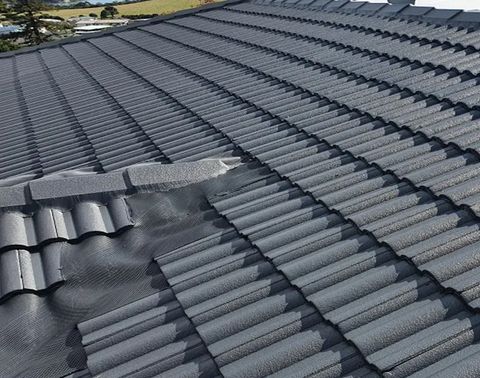
Clean, carefully
Many restorers pressure clean, but Monier strongly advises against pressure washers on roof tiles because of the risk of damage. Ask how your roofer will clean, and how they'll avoid cracking tiles or driving water under the overlaps.
Swap the cracked tiles
Only the damaged tiles need replacing. Older profiles aren't always made any more, so a roofer may use second-hand tiles or borrow some from a slope nobody sees.
Ridges, valleys and flashings
Ridge caps are rebedded and repointed, as our page on rebedding and repointing explains. Rusty valley irons and tired flashings cost less to replace now, while the roofer is set up, than on a separate visit later.
Recoat, if you want the look
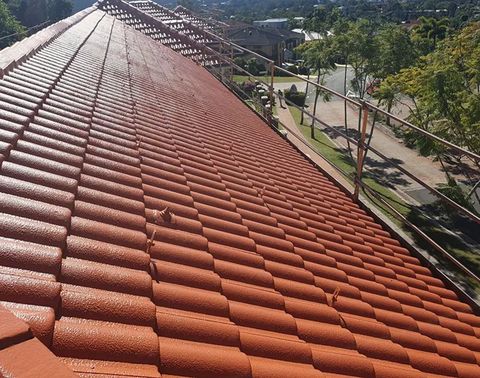
Usually a sealer, then two coats of roof membrane. Monier says repainting concrete tiles refreshes their appearance but doesn't improve waterproofing, and needs redoing every five years or so to keep the look. Coating makers see more value in it: Dulux offers material warranties of up to 15 years on its systems, depending on the product and a professional applicator.
What a restoration can't fix
A restoration works on the outside of the roof. It won't add sarking (the foil or membrane layer under the tiles) to a roof that never had it, and it won't fix rotten battens or a sagging frame.
If a roofer finds tiles cracking right across the roof, a coating won't hold them together. That's a replacement conversation, and our guide to restoration vs replacement helps you weigh it up.
Your part, and the roofer's
You can
- Scan the roof from the ground with binoculars for cracked tiles and gaps under the ridge caps
- If the manhole is easy and safe to reach, shine a torch around the roof space for stains or chinks of daylight
- Mention any rainwater tank, so it's disconnected before the clean
Leave to a roofer
- All cleaning on the roof, which can crack tiles or push water into the ceiling if it's done badly
- Lifting, replacing and relaying tiles and caps
- Applying any sealer and membrane
- Any grey sheeting on extensions or patios that could be asbestos cement
If it were our roof
If the tiles are solid, we'd spend first on the parts that keep water out: cracked tiles, the ridges and any rusty valleys. The recoat is a choice about looks, and a recurring one, so we'd ask for it as a separate line and decide with that in mind. Before signing, we'd want the cleaning method, the products and the number of replacement tiles allowed for, all in writing.
Want a roofer to take a look?
Tell us the job and your postcode. We match it with a Find My Roofer certified roofer who specialises in that kind of work, and they call you to quote. Your number goes to them alone.