What shapes a new roof in Melbourne
Bushfire ratings on the fringe
After Black Saturday on 7 February 2009, when 2,029 houses were lost across Victoria, rules for building in bushfire-prone areas were fast-tracked. A property's BAL rating, from BAL-LOW up to BAL-FZ (flame zone), is set by fire danger, slope and nearby vegetation, and it decides the construction standard. A new roof is part of that.
The suburbs that have burned before
Black Saturday hit Kinglake, Strathewen and St Andrews hardest and destroyed homes as close in as Narre Warren South and North. On Ash Wednesday in 1983, fires ran from Upper Beaconsfield to Cockatoo. Building on land under the Bushfire Management Overlay may need a planning permit.
Heritage overlays in the inner city
Albert Park, Fitzroy, Carlton, Parkville and East Melbourne sit under strict heritage overlays. Ask your council early what material and colour they'll accept, because it may rule out the cheapest option.
Terraces hide their roofs
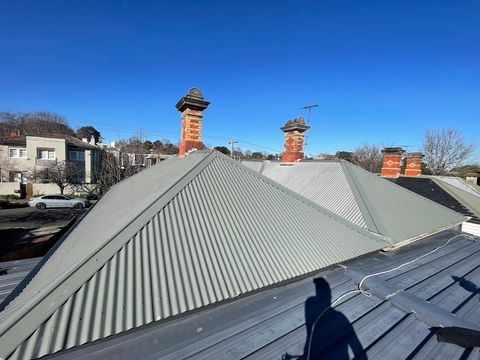
Melbourne's 1850s to 1890s terraces tuck the roof behind a decorative parapet, with box gutters, parapet flashings and shared walls. A re-roof here is more about drainage and junctions than the sheets.
Tile or metal for a Melbourne re-roof?
Away from the coast and outside the bushfire overlay, it mostly comes down to looks, weight and budget. Our Colorbond vs tile guide sets out the trade-offs. Near the water, the steel grade matters, because BlueScope treats most of Port Phillip as exposed water. See Colorbond roofing in Melbourne.
Check permits early. The City of Monash says swapping tiles for Colorbond isn't like-for-like and needs a building permit, while Maroondah's guide lists swapping corrugated iron for Colorbond as needing one too. Councils differ, so ask yours.
Contracts, deposits and insurance in Victoria
A re-roof that involves more than one trade and costs more than $10,000 needs a major domestic building contract, and only a registered builder can sign one. The deposit can't be more than 5% if the contract is $20,000 or more, or 10% below that. You can cool off within 5 clear business days of getting the signed contract.
From 1 July 2026, your builder takes out Home Warranty insurance for you on work worth more than $20,000, and you should receive a notice of cover. Pay for completed stages, not in advance. New contract laws take effect by 1 December 2026, so recheck the deposit rules after that.
Before the old roof comes off
If your roof might be asbestos cement, nobody should cut, drill, water-blast or walk on it until it's been checked. The Victorian Asbestos Hub says your builder or plumber generally isn't licensed to remove asbestos, so removal goes to a WorkSafe-licensed removalist and is priced separately. Ask for an EPA Waste Tracker record. Read is my roof asbestos? first.
Questions to ask a Melbourne roofer about a re-roof
- Do you know my property's BAL rating, and have you built roofs to that level before?
- Does my job need a building permit, a planning permit, or both, and will you arrange them?
- On a terrace: are the box gutters, rainwater heads and parapet flashings in the price?
- Who strips the old roof, who checks it for asbestos, and how is it disposed of?
- What's your Building and Plumbing Commission registration, and will I get a notice of Home Warranty cover?
- What's the workmanship warranty, and what manufacturer warranty comes with the roofing?
What we'd do
We'd sort the paperwork before chasing prices: check for a heritage overlay or the Bushfire Management Overlay, get the BAL rating if needed, and ask council about permits. That stops you comparing quotes for roofs that won't meet the rules. Then get two or three itemised quotes. Our national roof replacement page explains the job, and the Melbourne hub covers local conditions.
Want a roofer to take a look?
Tell us the job and your postcode. We match it with a Find My Roofer certified roofer who specialises in that kind of work, and they call you to quote. Your number goes to them alone.